 BoxDiegen
· Pizza Box
BoxDiegen
· Pizza Box
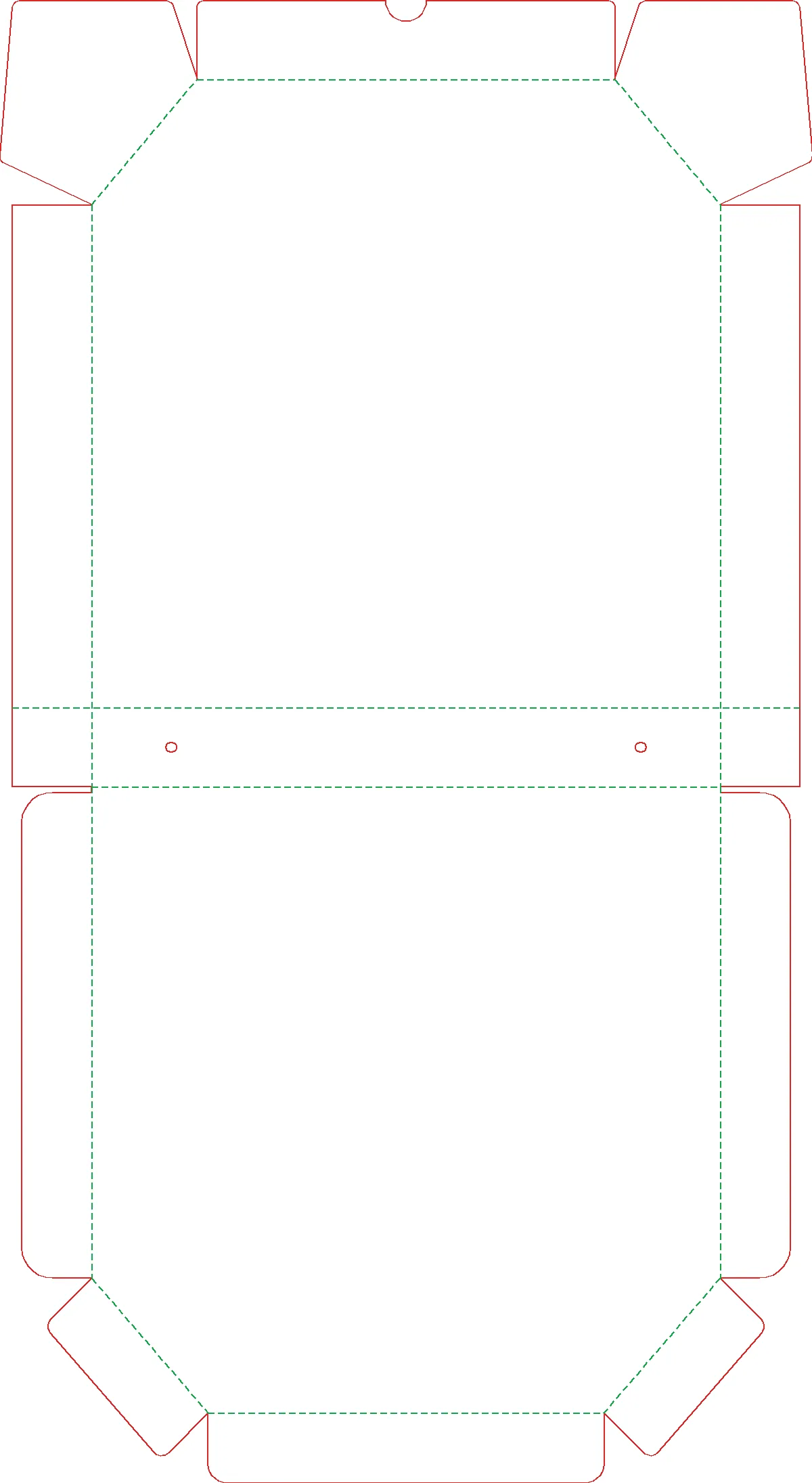
Pizza Box is the classic one-piece corrugated pizza box: a shallow base tray with a hinged lid, cut from a single sheet and assembled with no glue. The base’s front corners are angled, each formed by a diamond gusset flap that folds up along the chamfer, and the front wall carries a thumb notch for lifting the lid. Two vent holes in the back wall let steam escape so the crust stays crisp. This generator draws the complete blank to your size: front wall, base and lid panels, side walls, back wall, lid side flaps, corner flaps and tuck flap.
This generator makes the classic one-piece pizza box dieline: a shallow tray and its hinged lid cut from a single sheet of corrugated board, assembled by folding alone. Enter your size and download the dieline free as PDF, SVG, DXF or EPS for CorelDRAW.
The blank is one column: a front wall, the base panel, a narrow back wall, the lid panel and a tuck flap, with the walls and flaps in the strips at the sides. Its details are the ones that make a pizza box work. The base’s front corners are chamfered, and a diamond-shaped gusset flap hinged on each chamfer folds up to form the angled corner as the front wall rises. The lid’s front corners are chamfered too, each with a corner flap that folds in as the lid closes. Two round holes in the back wall vent the steam from a hot pizza, which keeps the crust crisp. A semicircular thumb notch in the front wall’s outer edge gives a fingertip grip for lifting the lid, and the lid’s tuck flap slides inside the front wall to hold the box shut.
Assembly needs no glue: fold the base side walls up, then fold the front wall up while folding each diamond gusset along its chamfer so the angled front corners form. Close the lid over the base — its side flaps fold down outside the base walls, its corner flaps fold in at the chamfers, and the tuck flap slips inside the front wall.
A is the length, B is the width and C is the height. Pizza boxes are square, so A and B match the pizza size; the inside of the box should clear the pizza’s diameter by about 10–15 mm, so turn the Inside size toggle on and enter the size you need inside.
| Size (A × B × C) | Typical use |
|---|---|
| 10 × 10 × 1.6 in (254 × 254 × 40 mm) | Personal pizza |
| 12 × 12 × 1.8 in (305 × 305 × 45 mm) | Medium pizza |
| 14 × 14 × 1.8 in (356 × 356 × 45 mm) | Large pizza |
| 16 × 16 × 2.0 in (406 × 406 × 50 mm) | Extra-large pizza |
| 18 × 18 × 2.0 in (457 × 457 × 50 mm) | Family pizza |
The generator’s starting size, 260 × 260 × 30 mm, suits a small snack pizza or flatbread. Height C is the wall height: 40–50 mm covers most pizzas including loaded toppings; deep-pan styles may need more.
Print your artwork on the lid panel — it is the face the customer sees — and keep the vent holes and the thumb notch clear of tape and labels so they can do their job. If a front corner feels loose, open the front wall and re-fold the diamond gusset fully along its chamfer so it sits flat inside the corner. For very greasy pizzas use a grease-resistant liner sheet inside the base.
In the exported file, red is the cut line, green dashed is a fold and blue dotted is a perforation. Print at 100 percent scale. Always fold a single test box from your actual board before bulk printing: corrugated board folds differently from paperboard, and one test fold confirms the size, the corner locks and the lid fit together.
Does this pizza box need glue?
No. The base folds up from one sheet: a diamond gusset flap on each front chamfer folds up to form the angled front corners, the front wall folds up over them, and the lid closes over the base with its side flaps outside the walls and its tuck flap slipped inside the front wall. The whole box assembles by folding alone.
What are the two holes in the back wall for?
They are ventilation holes. Steam from a hot pizza escapes through the rear wall instead of condensing inside the box, so the crust stays crisp instead of going soggy.
Why are the front corners angled?
Both the base and the lid have angled (chamfered) front corners. On the base, a diamond gusset flap folds up along each chamfer to form the corner; on the lid, a corner flap folds in along each chamfer. The finished box gets the classic angled pizza-box front, and the lid seats neatly over the base with no square corners poking out.
What size box do I need for a 12-inch pizza?
A 305 × 305 × 45 mm box with the Inside size toggle on. The inside must clear the pizza’s diameter with about 10–15 mm to spare so the crust is not crushed when the lid closes.
Which board should I use?
Corrugated board: F flute (1.0–1.2 mm) for lighter pizzas, E flute (1.5 mm) when the box must stack or travel. A kraft outer surface prints well and hides grease marks better than white board.
Is this pizza box dieline generator free?
Yes. It is free, with no signup and no download limit. Generate any size and export it as PDF, SVG, DXF or EPS for CorelDRAW.