 BoxDiegen
· Burger Box
BoxDiegen
· Burger Box
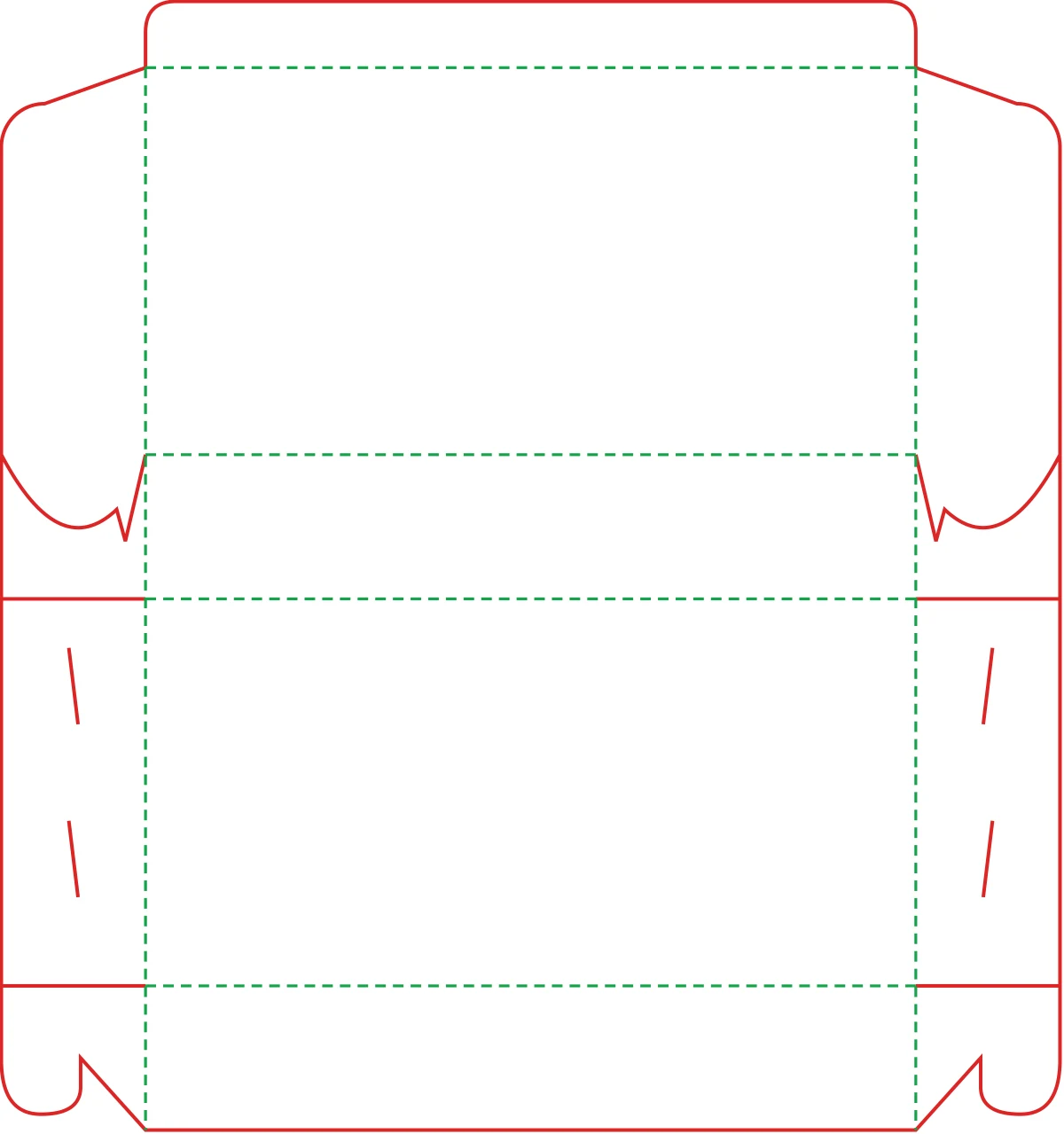
Food Box is the classic one-piece takeaway carton: a base tray with a hinged lid, cut from a single sheet and locked together with no glue — the dust flaps at the corners catch in slits in the side walls, and the lid closes with a full-width tuck flap. This generator draws the complete blank to your size: tuck flap, lid and base panels, back and front walls, side walls, dust flaps with their locking ears, and the side-wall slits.
This generator makes a one-piece hinged-lid food box dieline: a base tray and its lid cut from a single sheet, locking together with no glue. Enter your size and download the dieline free as PDF or SVG.
It is the classic rectangular takeaway carton. The blank is one column: a tuck flap, the lid panel, a back wall, the base panel and a front wall, with side walls beside the lid and base panels and small dust flaps beside the back and front walls. Fold the side walls up, tuck the dust flaps in against them, and the rounded ears on the dust flaps catch in the slits cut in the base side walls — that is the whole corner joint, no glue, no tape. The lid then folds over on the back wall and its full-width tuck flap slides into the front of the base to close the box.
Because it folds flat, locks by hand in seconds and presents one big printable lid, this is the standard carton for burgers, sandwiches, loaded fries, rice meals and bakery items in takeaways and cloud kitchens.
A is the length, B is the width and C is the height. Every wall — front, back and sides — is C tall, so C is simply how deep the box is.
| Size (A × B × C) | Typical use |
|---|---|
| 5.9 × 3.9 × 1.6 in (150 × 100 × 40 mm) | Sandwich, wrap or pastry box |
| 8.0 × 4.0 × 1.5 in (203 × 102 × 38 mm) | Long burger, hot dog or sub meal |
| 7.1 × 4.7 × 1.8 in (180 × 120 × 45 mm) | Burger with fries or a rice portion |
| 9.1 × 5.9 × 2.0 in (230 × 150 × 50 mm) | Family meal or grilled platter |
No glue is needed anywhere on this box — if a corner feels loose, the ear has missed its slit; push the dust flap fully home. Keep artwork off the dust flaps and the slit area, and put your branding on the lid panel, the face the customer opens.
In the exported file, red is the cut line, green dashed is a fold and blue dotted is a perforation. Print at 100 percent scale. For greasy food use a grease-resistant board or a liner, and test with hot food: steam softens board, so a box that closes cold should still close when the meal is hot.
How does this food box lock without glue?
The dust flaps beside the front and back walls fold in against the side walls, and the rounded ear on each dust flap catches in a slit cut in the base side wall. Four ears, four slits — the corners hold by that lock alone.
How does the lid close?
The lid is part of the same blank, hinged on the back wall. Fold it over the base and slide the full-width tuck flap on its front edge down inside the front wall. Friction holds it shut.
Can I change the tuck flap depth?
It is calculated from the height C (about 0.46 × C), which keeps it in proportion at any size, so there is no separate setting for it.
What size should I choose for a burger meal?
About 180 × 120 × 45 mm fits a burger with a small fries portion. Longer items like subs and hot dogs suit 203 × 102 × 38 mm. Measure the food as served, with a little room to spare.
Is this food box dieline generator free?
Yes. It is free, with no signup and no download limit. Generate any size and export it as PDF or SVG.
Burger Box · Pizza Box · Trapezoid Meal Box · Noodle Box · Mailer Box